
English| EUR
Suggested for you
More currencies
Choose a language
Lake Atitlán's villages are connected primarily by boat, with public ferries and private lanchas operating from multiple embarcaderos around the lake. Understanding the fare structure helps you budget for multi-village exploration and choose between shared and chartered transport.
Quick answer
Standard public boat fares at Lake Atitlán range from Q10 to Q25 per person per ride, depending on distance between villages. Short hops like Panajachel to Santa Cruz cost Q10–Q15, while longer routes to San Pedro or Santiago Atitlán run Q20–Q25. Private lancha charters cost Q150–Q300 depending on capacity and destination.
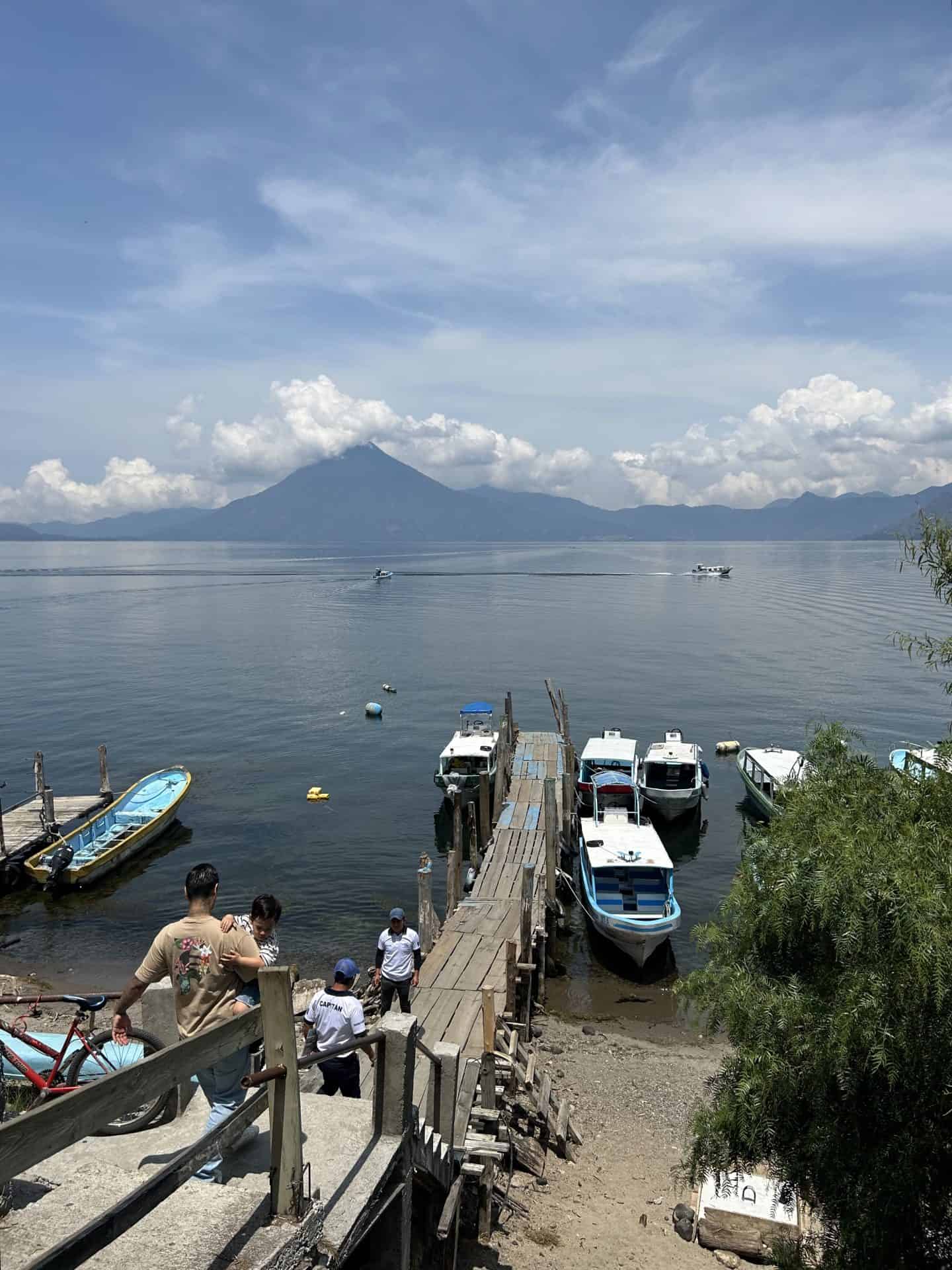
The public ferry system crossing Lake Atitlán operates without printed schedules, yet maintains a rhythm locals have relied on for decades—boats depart when full or at rough intervals throughout the day, creating a fluid network that adapts to passenger demand rather than rigid timetables. Lake Atitlán boat prices follow a distance-based structure that most vendors honor consistently. Panajachel serves as the lake's main transportation hub, with embarcaderos sending ferries to Santa Cruz La Laguna, San Marcos, San Pedro, Santiago Atitlán, and other villages. The Q10 fare covers the shortest crossings, while the furthest public routes reach Q25. These fares are paid directly to the boat captain or crew upon boarding or arrival—cash only, and change for large bills is often scarce during early morning departures. Private lanchas offer flexibility for groups or custom itineraries but operate at a fundamentally different price point, with charters starting around Q150 for nearby villages and scaling up for distant destinations or extended tours. The mechanics of Lake Atitlán water transport reveal themselves quickly to first-time visitors: embarcaderos are marked by clusters of waiting lanchas, captains call out destinations, and passengers board until the vessel reaches capacity or a departure threshold. Public boats typically seat 12 to 20 passengers on wooden benches, while private charters range from small motorized canoes to larger covered lanchas. The lake's volcanic geography means no road connects all shoreline communities—Santiago Atitlán and San Pedro have highway access, but villages like Santa Cruz and San Marcos remain boat-dependent, making water transport a necessity rather than a tourist novelty. Weather shapes both safety and cost considerations. Morning departures before 10:00 encounter calmer water, as afternoon winds—known locally as Xocomil—regularly generate waves that slow crossings and occasionally suspend service. Operators charge the same fare regardless of conditions, but choppy water extends travel time and comfort. Multi-day visitors quickly learn that clustering village visits into single outings reduces cumulative transport costs, and that early starts not only secure smoother rides but also align with the lake's most reliable departure windows when public boats run most frequently.
“The public ferry system crossing Lake Atitlán operates without printed schedules, yet maintains a rhythm locals have relied on for decades.”
Public boat travel on Lake Atitlán operates via a system of shared lanchas where costs depend entirely on the specific route taken. There is no central admission fee for using these public docks.
Verdict: A typical adult pays between Q10 and Q25 per ride, with the final cost determined by the distance of the trip.
Public boat transportation across Lake Atitlán operates on a consistent daily schedule throughout the year.
Public boat travel on Lake Atitlán centers on the public docks, or embarcaderos, located at the waterfront in Panajachel. Travelers should navigate to the main pier area where boats depart regularly to various lakeside villages.
Walk to the end of Calle Santander toward the lakefront
Public lanchas from Panajachel main dock to San Pedro/San Juan
Public lanchas from Panajachel main dock to Santiago Atitlán
Locate the designated kiosks or signs at the Panajachel dock to confirm your destination before boarding, as different boats serve distinct village routes.
Navigating the lake transport network requires understanding local practices to ensure smooth transit between villages.
Captains often lack change for large bills, so keep small quetzal notes ready for your fare. This avoids delays and ensures you do not overpay when boarding.
State your specific village name clearly to the dock attendant before stepping onto the boat. Wait for their confirmation before boarding to ensure the vessel is heading to your intended stop.
You are expected to load and unload your own bags from the boat deck. Keep items compact and easy to handle to speed up boarding for everyone on board.
If traveling in a group or needing a specific schedule, you can negotiate a private lancha rate at the main docks. Ensure the price is agreed upon before departure to avoid confusion upon arrival.
Some boats make multiple stops while others run direct routes between major villages. Ask the captain if they are stopping at your village specifically to avoid unnecessary detours.
Everything you need to know about lake atitlan boat prices
Public boat fares, known locally as lanchas, generally range between Q10 and Q25 per ride depending on the distance between villages. These lake atitlan boat prices are paid directly to the boat operator or dock representative.
There is no entrance fee required to access the public docks, or embarcaderos, at Lake Atitlán. You only pay for your transit when boarding a vessel.
Boats operate daily from 06:30 to 19:30. Staying within these hours ensures you can utilize standard water taxi services between the various communities.
The best arrival window is between 06:30 and 10:00. Traveling during these morning hours provides the calmest water conditions before the typical afternoon winds begin to increase.
Payment is typically handled in cash at the dock before departure or once you are on board the vessel. It is helpful to carry small denominations of quetzales to simplify the exchange for these transit costs.
While rates can occasionally vary based on demand or specific routes, standard lake atitlan boat prices are generally applied to all passengers using the public lancha network. Consistency in pricing helps maintain predictable travel logistics for visitors.
To navigate the lake, head to the public embarcaderos in Panajachel where boats depart regularly for surrounding villages. These water taxis serve as the primary mode of public transit around the lake basin.
There is no need to book your trip in advance for public water taxis. You simply arrive at the dock during operating hours and wait for the next available boat to your destination.
While lake atitlan boat prices remain consistent throughout the day, the frequency of boat departures may decrease in the late afternoon. It is always best to plan your travel before the wind picks up later in the day.